
Auto Care State Affairs Monthly Update- April 2026
Top Actions This Month: Maine LD 2211 right-to-repair bill heads for a decisive floor vote. California AB 2245 (lubricant EPR) letters are due April 6; members who sell lubricants should review and act. Kansas HB 2700 is on the governor's desk, with urgent grassroots engagement needed.
This first issue of the Auto Care State Affairs Monthly Update recaps state-level events and previews what's ahead. If a bill affects your business, we'll keep you informed, share our actions, and show you how to get involved.
March Recap / April Look Ahead
March was one of the busiest months this program has had. The Auto Care Association filed testimony, submitted letters, coordinated with coalition partners, visited members on the ground, and engaged on bills in more than a dozen states. Several of those bills are now heading into April deadlines. Here is what happened, what we did about it, and what is coming next.
March Wins
Utah HB 119: Signed into Law
This one went the distance. Utah HB 119 began as a bill that imposed subjective quality standards on aftermarket crash parts, with no industry compliance pathway. The Auto Care Association formally opposed it in January, testified publicly, and proposed an alternative based on objective, third-party certification standards. When the sponsor filed a version removing the problematic certification framework, the Association shifted to support. The bill passed the House 68-1 and the Senate 25-0 before the governor signed it into law.
We activated 951 Utah stakeholders through a grassroots alert, and 18 members contacted legislators. That number should grow as the program matures, but the engagement showed industry attention. If you would like to be notified about future grassroots alerts and advocacy opportunities in your state, sign up for our action alerts at autocareadvocacy.org. Getting involved is the best way to make your voice heard when key bills move.
Maine LD 292: Killed in Committee
Maine had two competing bills on right-to-repair implementation. LD 2211 is the governor's bill and the one we support. LD 292 was an OEM-backed alternative that would have carved out heavy-duty vehicles from Maine's right-to-repair law and handed oversight to NASTF, an OEM-funded body with no enforcement authority. That is not independent oversight.
The Auto Care Association coordinated with partners on the ground, alerted key industry leaders, including FleetPride's Baron Oursler, and organized coalition presence at the March 12 working session. The committee voted "ought not to pass." LD 292 is dead. The private oversight proposal is off the table. That is a significant win for the independent repair industry.
Oregon HB 4144: Signed into Law
Oregon's battery stewardship bill passed both chambers in late February and early March and was signed into law. This sets a precedent for West Coast EPR on battery collection and recycling. If you sell batteries in Oregon, new compliance requirements are coming into effect. We flagged this to our environmental policy team and logged it as a precedent marker for other states.
Virginia HB 312: Passed Both Chambers
Virginia's glass repair and ADAS notification bill passed both chambers and awaits the governor's signature. It requires an ADAS calibration notification after glass replacement and establishes a framework that other states are considering.
Right to Repair and Vehicle Data Access
Kansas HB 2700: On the Governor's Desk
The bill passed both chambers and awaits the governor. It establishes a framework for motor vehicle right-to-repair. However, Section 3(b)(1) allows automakers to comply through unenforced voluntary agreements (MOUs), so a company can claim they share data without accountability.
The Auto Care Association has raised this concern directly with the governor's office. If you're in Kansas, act now: contact your legislators and the governor's office using this link: https://www.autocareadvocacy.org/legislator-lookup/. Your outreach can influence the outcome.
Not sure what to say? Here's suggested language you can use when reaching out:
"As a member of Kansas' independent auto care industry, I am concerned that Section 3(b)(1) of HB 2700 allows automakers to use voluntary agreements that are not enforceable. Please support amendments or action that ensure real, accountable access to vehicle data and protect genuine right-to-repair in our state."
Even a short message makes a difference—your voice matters.
Maine LD 2211: Floor Vote Coming
With LD 292 killed, LD 2211 is the only vehicle left for the right-to-repair implementation in Maine. The bill establishes a 12-member Motor Vehicle Right to Repair Commission, includes heavy-duty vehicles, sets a September 2027 deadline for telematics data access, and creates enforcement mechanisms with penalties up to $10,000 per violation.
The committee issued a divided report, which means the bill is heading to a floor vote before the legislature adjourns on April 15. The Auto Care Association has been engaged throughout, from coordinating with partners on the ground on floor strategy to attending a Governor Mills fundraiser where we raised LD 2211 directly. This is the bill that turns Maine's right-to-repair law from a concept into an operating system. If it passes, it becomes the national model.
Massachusetts S 2998: Moving Through Committee
This bill was reported favorably by the committee and referred to the Senate Ways and Means Committee on March 26. It addresses the relationship between dealers, manufacturers, and distributors. Two provisions matter for the broader industry: manufacturers must compensate dealers for assisting customers with over-the-air updates and remote repairs, and manufacturers cannot dictate what dealers charge for parts and labor on retail work. The legislature runs through July, so the Auto Care Association is monitoring its progress.
Missouri HB 1914: The House voted Do Pass on March 26 on a bill setting franchise warranty rules: dealer compensation, limits on audits, and a formal complaint process. Missouri's session ends May 15.
Iowa SF 2383: Active Opposition
This bill would restrict aftermarket crash parts by defaulting to OEM replacements for third-party insurance claims. In March, we submitted a formal opposition letter (Auto Care Association letterhead) to Chair Zumbach and the Senate Transportation Committee, citing Iowa's 32,729 jobs and $8 billion in aftermarket economic activity. We also sent a letter to Commerce Committee Chair Bousselot and emailed Senator Trone Garriott with two amendment requests: remove the 100-mile distributor limit affecting rural shops, and require insurers to disclose OEM and aftermarket price differences before customer consent.
The subcommittee recommended amendment and passage on March 10. Coalition partners attended the hearing. We are following up to confirm what language made it into the amendments. As of today, no new bill text has been released. Iowa's session ends April 21. The clock is running.
Insurance and Repair Facility Conduct
Ohio SB 306: Passed the Senate, Heading to the House
SB 306 passed the Ohio Senate and awaits a House floor vote. For Ohio's independent repair shops, the bill would prevent customers from assigning insurance claims to you, limit storage fees for totaled vehicles, and require you to give insurers vehicle access on their schedule. Dealerships are excluded from these requirements.
The Auto Care Association is engaging with Ohio legislators and coalition partners to push for amendments that treat all repair businesses equally.
Ohio HB 636: Active Opposition
Ohio HB 636, labeled as a consumer choice bill, actually requires special disclosures for aftermarket parts and encourages OEM use.
The Auto Care Association drafted opposition testimony and attempted to submit it through the online portal for the March 3 committee hearing. The bill was listed as sponsor-only testimony that day, so our testimony is staged and ready for the next hearing when outside testimony is accepted. We are coordinating with coalition partners in Ohio to monitor the committee calendar.
Vehicle Safety and ADAS
Louisiana HB 929: Floor Vote
The Louisiana Motor Vehicle Glass Law cleared the committee in March and was scheduled for a House floor vote on March 31. If you do windshield or glass repair, this bill would require you to give customers written notice of whether their vehicle has ADAS that needs recalibration, whether your shop can perform the recalibration, and whether the recalibration will meet manufacturer specifications. It also bans customers from signing away their rights to insurance claims for glass work. The Auto Care Association is monitoring this bill as part of a growing national pattern of state-level ADAS regulation.
Louisiana HB 945: Active Engagement
This bill is a mixed bag. Sections B and C contain strong anti-steering provisions that protect independent shops from insurer pressure, which is a good thing. Section D is the problem: it creates a consent-and-liability framework for non-OEM parts that serves as a stealth OEM-preference mechanism.
In March, the Auto Care Association triaged the bill and drafted pro-aftermarket amendment language to replace Section D. We emailed coalition partners, asking them to confirm whether they have contacts in Louisiana or access to relevant committees, and to pursue a meeting with the bill sponsor. We contacted the bill sponsor's office, introduced the association to the committee chair, and sent out a member action alert specifically instructing Louisiana-based members to contact the sponsor directly. Our posture is amend, not kill.
Maryland SB 789: ADAS Recalibration Standards
Maryland's ADAS bill had its first hearing before the Senate Judicial Proceedings Committee on March 4. The Auto Care Association attended the hearing, sent an introductory email to the bill sponsor, Senator Jennings, requesting the amended bill text, shared a technical summary with internal subject matter experts for input on whether OEM procedure availability is workable for independents, and reached out to a Maryland shop owner for an on-the-ground perspective.
The sponsor's office shared an amended version that improved materially. The OEM equipment carve-out was added, meaning shops are not required to use OEM tools and equipment, only to meet OEM specifications as a performance standard. A formal industry consultation requirement was added to the rulemaking process. We are now waiting on the next version before finalizing a position.
The legislature adjourns on April 13. SB 789 and the companion right-to-repair bill HB 1429 both need to clear the committee before then.
Illinois HB 4373: Glass Repair and ADAS Notification
Illinois introduced a glass-repair bill with ADAS-notification requirements and anti-steering provisions. The hearing was on March 18. The anti-steering language is favorable. We flagged the ADAS calibration angle to internal subject matter experts. This bill is part of the same national pattern as Louisiana HB 929 and Virginia HB 312.
Extended Producer Responsibility (EPR)
If you sell motor oil, lubricants, filters, batteries, or tires, you need to understand EPR laws. EPR stands for extended producer responsibility. It makes the companies that manufacture or import products responsible for collecting and recycling the packaging and waste at the end of life. How these programs get set up determines what it costs everyone in the supply chain, including you.
California AB 2245: Hearing April 14
This bill would create an EPR program for lubricant containers and automotive products, separating them from the broader SB 54 packaging program and establishing a dedicated industry structure. The Auto Care Association has been engaged since the bill was introduced. We are working with partners on the ground in Sacramento. We reviewed the full bill text, identified the open-ended product definition (CalRecycle could expand scope without legislative approval) and the retailer enforcement provision (you cannot sell a covered product unless the manufacturer is listed as compliant) as the two biggest concerns.
The hearing was originally scheduled for March 24 but was pushed to April 14. Committee letters are due Monday, April 6. The Auto Care Association's position is neutral pending member feedback and a proposed amendment package. Our amendment asks for the Colorado multi-PRO model, which allows multiple producer responsibility organizations to compete rather than locking in a single entity.
If you sell lubricants, this bill could require you to register as a producer, ensure covered products are sold only by compliant manufacturers, and adjust your operations if CalRecycle broadens the definition of regulated products or enforces stricter requirements. Retailers may also face restrictions on the sale of non-compliant products and new record-keeping obligations. For a detailed assessment of impacts on your California operations, email GovernmentAffairs@autocare.org.
Separately, a major lawsuit filed against CalRecycle's enforcement of SB 343 recycling labeling may affect the regulatory environment for AB 2245. The Association has prepared a member alert that analyzes the intersection of the two.
Illinois SB 3157: Mirror Image of AB 2245
This bill uses the same language, same sponsor (NLCRC), and same single-PRO structure (LPMA) as the California bill. It was re-referred to Assignments on March 27, slowing its progress. Illinois does not adjourn until May 31. The crossover deadline is April 17. The parallel movement in California and Illinois signals that lubricant EPR is a coordinated national push, not isolated state activity. Our amendment asks the same: Colorado multi-PRO model.
New York S 7553: Tire EPR
A tire-specific EPR bill moved to the Senate Finance Committee on March 25. If enacted, producers would need to submit collection and recycling plans, and retailers would be prohibited from selling tires unless they are part of an approved program. The Auto Care Association is monitoring this bill. If you sell tires in New York, keep an eye on it.
Wisconsin AB 713: Battery EPR Passed Both Chambers
Wisconsin's battery stewardship bill passed both chambers and was enrolled on March 26. The governor has not signed it and may not, but the passage shows where legislative momentum is on product-specific EPR nationwide.
Colorado SB 26-090
Colorado is moving additional EPR legislation through its legislature, which is in session through May 13. Colorado already operates under a multi-PRO model for packaging EPR, and the Auto Care Association views that structure as the preferred approach for any state. It is the benchmark we reference when asking other states to amend single-PRO bills.
Georgia Three-Bill Collision Repair Package
Georgia HB 1419, HB 1420, HB 1421
In March, we triaged a three-bill collision repair package introduced in Georgia. HB 1419 would require insurers to process supplemental estimates within defined timelines. HB 1421 would prohibit insurer steering to preferred repair facilities. Both are favorable to independent shops. HB 1420, which mandates OEM repair procedures for all collision repairs under motor vehicle liability policies, is the one we flagged for closer review because it could indirectly disadvantage aftermarket parts.
The Auto Care Association coordinated with coalition partners to align positioning before any public action. Georgia adjourns on April 2, and none of the three bills received a hearing, so they are effectively dead for this session. But the triage and coalition coordination are on file for when similar bills surface in other states or if Georgia carries them over.
Grassroots Program
Facility Visit: Global Parts Distributors, Macon, Georgia
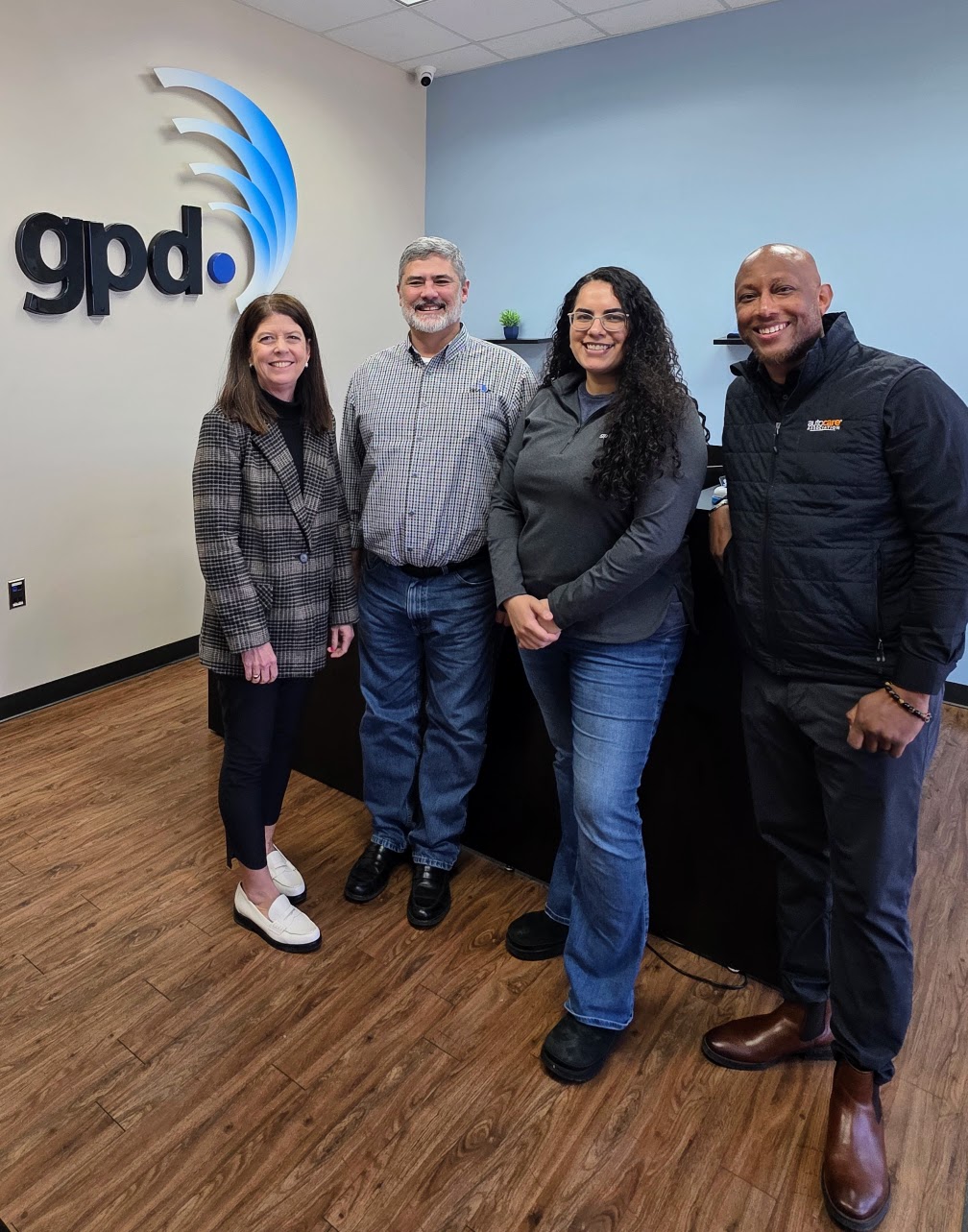
Senior Vice President of Government Affairs and General Counsel Lisa Foshee and Director of State Affairs and Grassroots Programs Donovan Ringo visited Global Parts Distributors (GPD) in Macon, Georgia, in March. GPD is a national brand of aftermarket automotive air-conditioning and heat-exchange products. The visit was part of the Association's effort to get face time with members where they work, hear what is on their radar, and connect their voice to what is happening in state capitals. These visits directly inform the Association's advocacy priorities.
If your business would like a visit from the Government Affairs team, reach out at GovernmentAffairs@autocare.org. A visit gives you the chance to discuss the legislative issues that matter most to your company, provide direct feedback to our advocacy team, and ensure your concerns are heard in state and national policy discussions. These visits help us tailor our efforts to the unique challenges you face, making your voice a priority in our legislative strategy.
Find Your Legislator: Now Live
We launched a "Find Your Legislator" tool on autocareadvocacy.org this month. You can look up your elected officials at the state and federal levels and reach out directly. We built it because the most powerful message a legislator can hear is from a business owner in their district. Use it: https://www.autocareadvocacy.org/legislator-lookup/
What to Watch in April
Kansas (Governor's decision imminent) HB 2700 is on the desk. The MOU exemption is the problem. If you are in Kansas, call now.
California (Committee letter deadline April 6 / Hearing April 14) AB 2245 lubricant EPR. If you sell lubricant products in California, this is the bill to watch. Letters due Monday.
Georgia (Sine Die April 2) Session ends Wednesday. No auto care hearings, but watching for late-session vehicle language.
Maine (Adjourns April 15) LD 2211 floor vote coming. This is the national model for telematics data access. All eyes on Augusta.
Kentucky (Veto recess April 1 to 13, Adjourns April 15) Monitoring for any auto care activity in the final days.
Maryland (Adjourns April 13) SB 789 (ADAS) and HB 1429 (right to repair) must clear committee, or they are done.
Iowa (Adjourns April 21) SF 2383 amendment language still pending. The Association's letters are on file, and we are following up on the subcommittee outcome.
Illinois (Crossover April 17 / Adjourns May 31) SB 3157 (lubricant EPR) and HB 4546 (household hazardous waste) face the April 17 crossover deadline.
Ohio (Year-round session) SB 306 heads to House committees. HB 636 awaits opponent testimony scheduling. Both are active.
Louisiana (Session through June 1) HB 929 (glass/ADAS) expected to pass the House. HB 945 amendment strategy is in motion.
Virginia (Governor deadline April 13) HB 312 (glass/ADAS notification) awaiting governor action.
By the Numbers
The Auto Care Association's government affairs team is tracking more than 90 state bills this session across five issue areas: right-to-repair, extended producer responsibility, PFAS, vehicle safety, and workforce training. Thirty-four states, plus the District of Columbia, are currently in session. In March alone, the association filed formal testimony or position letters in Utah, Iowa, Ohio, Louisiana, and Maryland, coordinated with coalition partners in seven states, triaged 58 new bills from policy-tracking alerts, and deployed grassroots activations in Utah and Louisiana.
Make Your Voice Heard
These bills affect your livelihood. Find your legislators and let them know: https://www.autocareadvocacy.org/legislator-lookup/
Questions about any bill mentioned here? Email: GovernmentAffairs@autocare.org
This newsletter was drafted with the assistance of AI tools and reviewed by Auto Care Association staff.

Welcome to the new YANG Effect! Your one-stop quarterly newsletter for all things Automotive Aftermarket contributed to and written by under-40 industry professionals.
More posts

Market Insights with Mike is a series presented by the Auto Care Association's Director of Market Intelligence, Mike Chung, that is dedicated to analyzing market-influencing trends as they happen and their potential effects on your business and the auto care industry.
More posts