
Aftermarket companies staying agile in dynamic economy
Based on mid-July Market Intelligence Pulse Survey
Margin Pressure Is Universal
The macro environment has been painful – all four topics was identified as moderately, very or extremely impactful by a supermajority:

Figure 1: If this were The Lego Movie, Emmet Brickowski would shout with glee, “Everything is Painful!” If this were a '90s prog rock song, Michael Stipe would ruefully croon, “Everybody hurts".
Freight rates and tariff volatility are more salient for manufacturers, distributors, and tool & diagnostic developers.
K-Shaped Economy Influencing Demand and Supplier Response
Half of participating companies (49%) are already observing “a shift in product/service tier demand”, and another one-third (33%) expect one. Likely as a result, nearly half (42%) have “doubled down on premium, enthusiast, or high-margin specialty segments”, while more than one-third (38%) have “expanded budget/white-label offerings to address price sensitivity”. One-third (34%) have observed “a migration from DIY sales to DIFM services”.
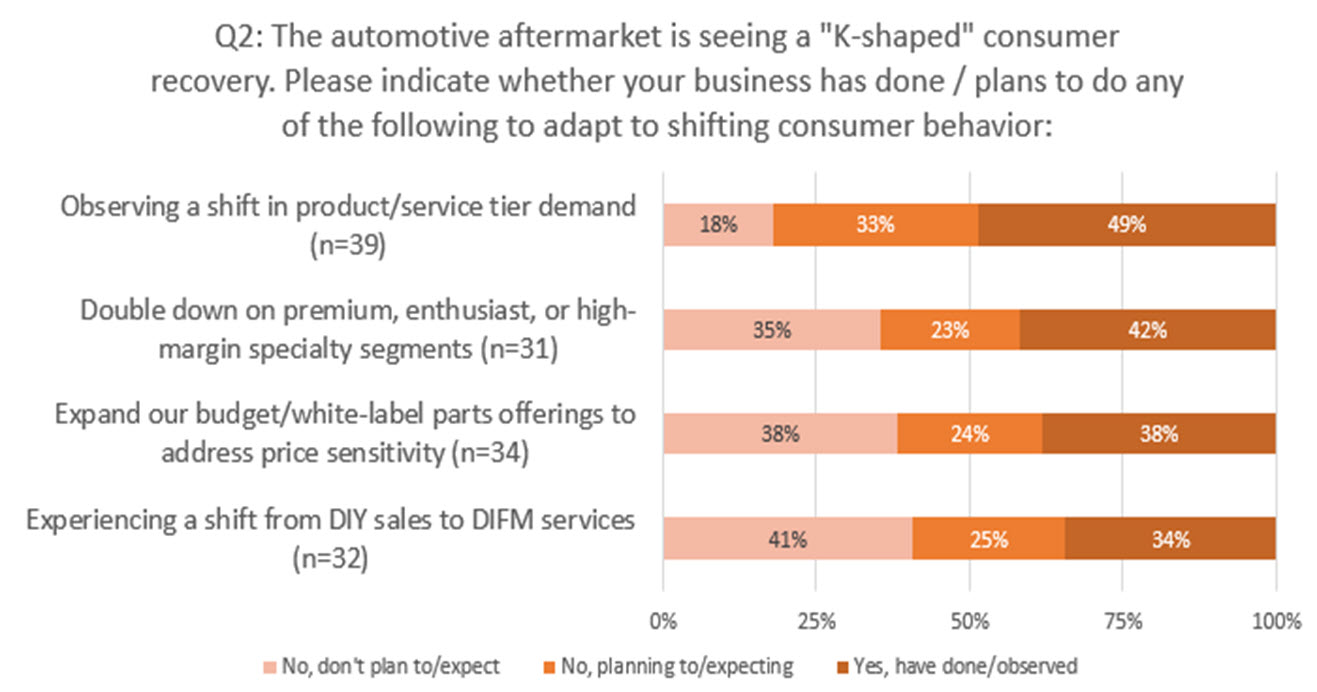
Figure 2: Consumers often delay maintenance, trade down, and/or take on repairs themselves during tough economies – many aftermarket companies have observed or anticipate these behaviors.
Vehicle Complexity is Forcing a Tech Upgrade
Vehicle complexity is driving catalog modernization and AI-enabled predictive analytics. As charted below, increasing the velocity of getting parts into consumers’ hands is a focus.

Wide Range of Response to Supply Chain Challenges
As charted below, responses to global shocks are evenly spread across four strategies:

Cautious Optimism on Right to Repair
Regarding confidence in the Federal government’s likelihood to legislate on Right to Repair, the vast majority are somewhat confident that this will happen:

Figure 5: Market Intelligence Committee members and guests predominantly anticipate slow progress on the issue of fair data access (n=39).
Thumbnail Summary
- Cost pressure is challenging. Four separate macro factors are highly impactful (Top 3 70%+), pointing to the challenge of achieving profitability goals.
- Catalog management demonstrates distinct customer profiles. That companies who “Double down on premium, enthusiast, or high-margin specialty segments” (42%) parallels “Expand our budget / white label parts offerings” (38%) demonstrates the K-shaped recovery.
- Digital commerce leads hardware as the tech priority. Catalog modernization and predictive analytics point to efforts to increase efficiencies in delivering in-demand products to customers.
- Revenue level affects the supply-chain response. Higher revenue companies are more likely to pursue dual sourcing; lower-revenue firms are evenly distributed across the strategies queried.
- Right-to-repair risk is perceived as manageable but unresolved. That 74% are “somewhat confident” bolsters the need for continued advocacy, not complacency.
- By organization type: parts/component manufacturers (n=14), warehouse distributors (n=7), retailer/e-commerce (n-3), repair shop / service provider (n=3), professional services (n=3), tool / diagnostic equipment developer (n=1), other (n=6).
- By revenue: “in the millions” (n=24), “in the billions” (n=13).

Welcome to the new YANG Effect! Your one-stop quarterly newsletter for all things Automotive Aftermarket contributed to and written by under-40 industry professionals.
More posts

Market Insights with Mike is a series presented by the Auto Care Association's Director of Market Intelligence, Mike Chung, that is dedicated to analyzing market-influencing trends as they happen and their potential effects on your business and the auto care industry.
More posts